
Kaffee aus dem Wald: Was ein Projekt in Uganda zeigt
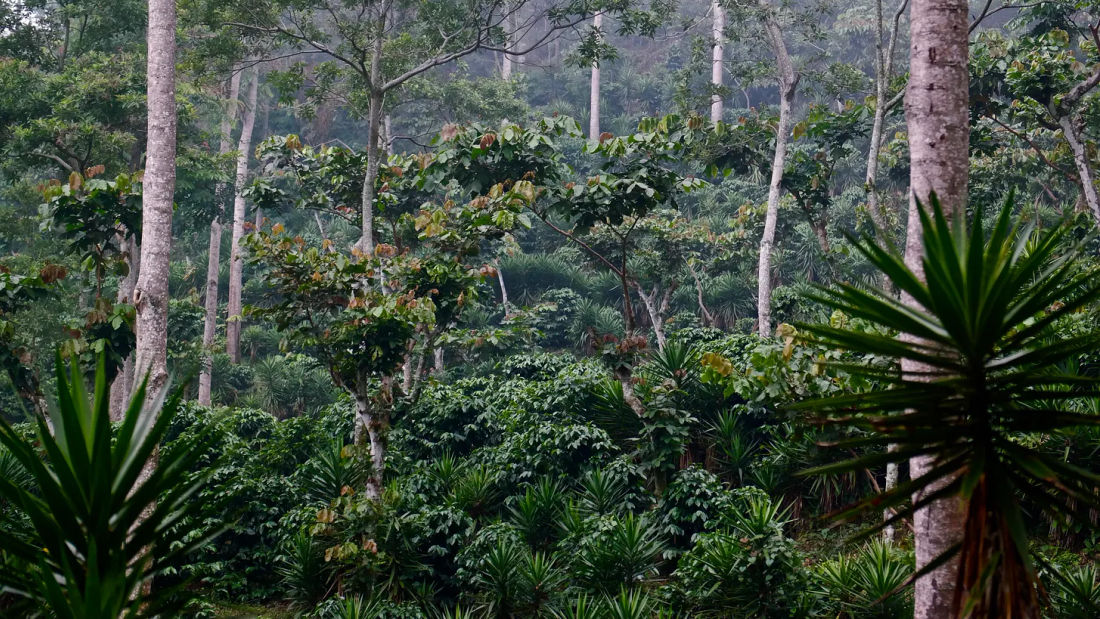
Im Westen Ugandas, an den Hängen des Rwenzori-Gebirges, liegen Kaffeefarmen direkt neben einem Nationalpark, der zum UNESCO-Welterbe gehört. Am 8. Oktober haben dort mehrere Partner ein Projekt gestartet, das von einer einfachen Überlegung ausgeht: Die Bäume rund um den Kaffee gehören zum Betrieb, und wer sie stehen lässt, soll mehr verdienen. Das Projekt ist klein. Für dich als Kaffeetrinkerin oder Kaffeetrinker in der Schweiz steckt trotzdem eine klare Botschaft darin: Waldfreundlicher Kaffee kostet etwas, und irgendwer muss bereit sein, das zu bezahlen.
What the project intends to do
It's called "Forest-Friendly Coffee for Climate Resilience in Rwenzori." According to Uganda Radio Network, it's a joint project of WWF Uganda, the food company Kima Foods, and the exporter Kyagalanyi Coffee Limited. Funding comes from the Danish Ministry of Foreign Affairs through the Danish Green Business Partnership. The budget is US$1.46 million, approximately 5.3 billion Ugandan shillings, and the project runs from 2026 to 2029.
The project aims to reach 2,500 coffee-growing households in the Kasese and Bunyangabu districts. Plans include demonstration farms and tree nurseries in the villages, improved access to credit, more reliable traceability and quality control, and the restoration of damaged land and ecosystems upon which the communities depend. Kima Foods intends to provide more high-quality coffee seedlings and help families strengthen their savings groups and develop additional income streams beyond coffee production.
Project coordinator Harriet Kokugonza of WWF Uganda said at the launch that poor farming practices in the region have contributed to depleted soils, declining biodiversity, low incomes, and food insecurity. Country director Ivan Tumuhimbise wants to demonstrate that coffee can provide more income for families while protecting the surrounding natural environment.
Why an exporter is at the table
The project page for the Danish partnership program openly states the business aspect. WWF Denmark and Kyagalanyi aim to establish a traceable, deforestation-free supply chain that complies with the EU Deforestation Regulation (EUDR) and certification standards. The coffee is intended to be marketed as forest-friendly coffee to premium consumers in Europe. Farmers who supply the coffee will be rewarded with premium contracts and loyalty bonuses.
The timing is no coincidence. From December 30, 2026, the EUDR (European Union Distribution Directive) will apply to large and medium-sized companies. In a recent survey by the International Institute for Sustainable Development, 79 percent of the coffee producers surveyed said that stricter rules could push farmers into less regulated markets. Projects like this one aim to turn proof of origin into an additional income, making the effort worthwhile for the families.
Sandra Bry, responsible for forestry projects in the region at the Danish embassy, said that international coffee markets are placing increasingly higher demands on quality. The project aims to help Ugandan producers meet these demands.
Kyagalanyi, according to the International Finance Corporation the oldest licensed coffee exporter in Uganda, has been operating in the Rwenzori region for years. A previous program to revive coffee cultivation there began in 2018.
Good trees need ripe cherries.
At the launch, local representatives also mentioned a problem that no single nursery can solve alone. Kisolhu Yonasani, representative of the Kasese district, said that many farmers harvest the coffee too early, which negatively impacts quality and price. Better seedlings and shade trees only pay off when the cherries are picked ripe and carefully processed.
Therefore, the project combines several elements: training, quality control, traceability, and financing. Those who receive a premium for a cleanly picked, traceable batch have an incentive to leave the trees standing and wait for ripe fruit. The partners describe coffee production in the Rwenzori Mountains as dependent on healthy forests, while climate change and depleted soils threaten harvests and bean quality.
To be honest, a project launch is just a plan. 2,500 households is a manageable number, and reliable results won't be available until the end of the decade. Nevertheless, the direction is right: paying for the forest that sustains coffee production.
What that means for your cup
In the Kaffa region of southwestern Ethiopia, where our coffee originates, the situation is different. There, the coffee grows under the forest canopy, and in 2010 UNESCO recognized the Kaffa Biosphere Reserve. The farming families we work with don't have to reforest to be able to call their coffee forest-friendly. Their task is to preserve the existing forest.
Projects like the one on the Rwenzori Mountains demonstrate how much time, money, and patience it takes to restore deforested areas. This makes the remaining forests and the people who care for them every day all the more valuable.
Next time you're choosing a coffee, ask yourself: Where are the trees? With our coffee from Kaffa, the answer is simple. They're all around the bushes where it grows.
Sources / Quellen
- Uganda Radio Network, 8 Oct 2026: WWF-Uganda and partners launch climate-resilient coffee project in Rwenzori:
- The Kampala Report, 9 Oct 2026: New project targets 2,500 coffee households in Rwenzori region:
- Danida Business Partnerships: Forest-Friendly Coffee for Climate Resilience in the Rwenzories (project page):